Life makes no promises.
I've spent more than 30 years listening to people talk about the lives they thought they were going to have. Marriages that were supposed to last. Careers that were supposed to be fulfilling. Children who were supposed to be healthy. Retirement plans, financial security, relationships, opportunities. All the things people work toward, sometimes for decades, believing that if they make good decisions and work hard enough, things will turn out reasonably well. And sometimes they do. But sometimes they don't.
One of the more difficult things we have to come to terms with as adults is that life is not particularly interested in our plans. We can do everything right and still lose something important. We can be responsible, thoughtful, generous people and find ourselves dealing with circumstances we did absolutely nothing to deserve. We can spend years working toward something only to discover that the opportunity has disappeared, the relationship has ended, or the future we imagined is no longer possible.
And the world is unfair. Terribly unfair, sometimes. It seems we're reminded of that almost daily. Good people suffer. People who behave badly sometimes prosper. Children experience things no child should experience. People lose homes, livelihoods, health, and loved ones through no fault of their own. I don't think we do anyone a favor by pretending otherwise. But I also don't think unfairness gets to have the final word.
My fishing pole theory.
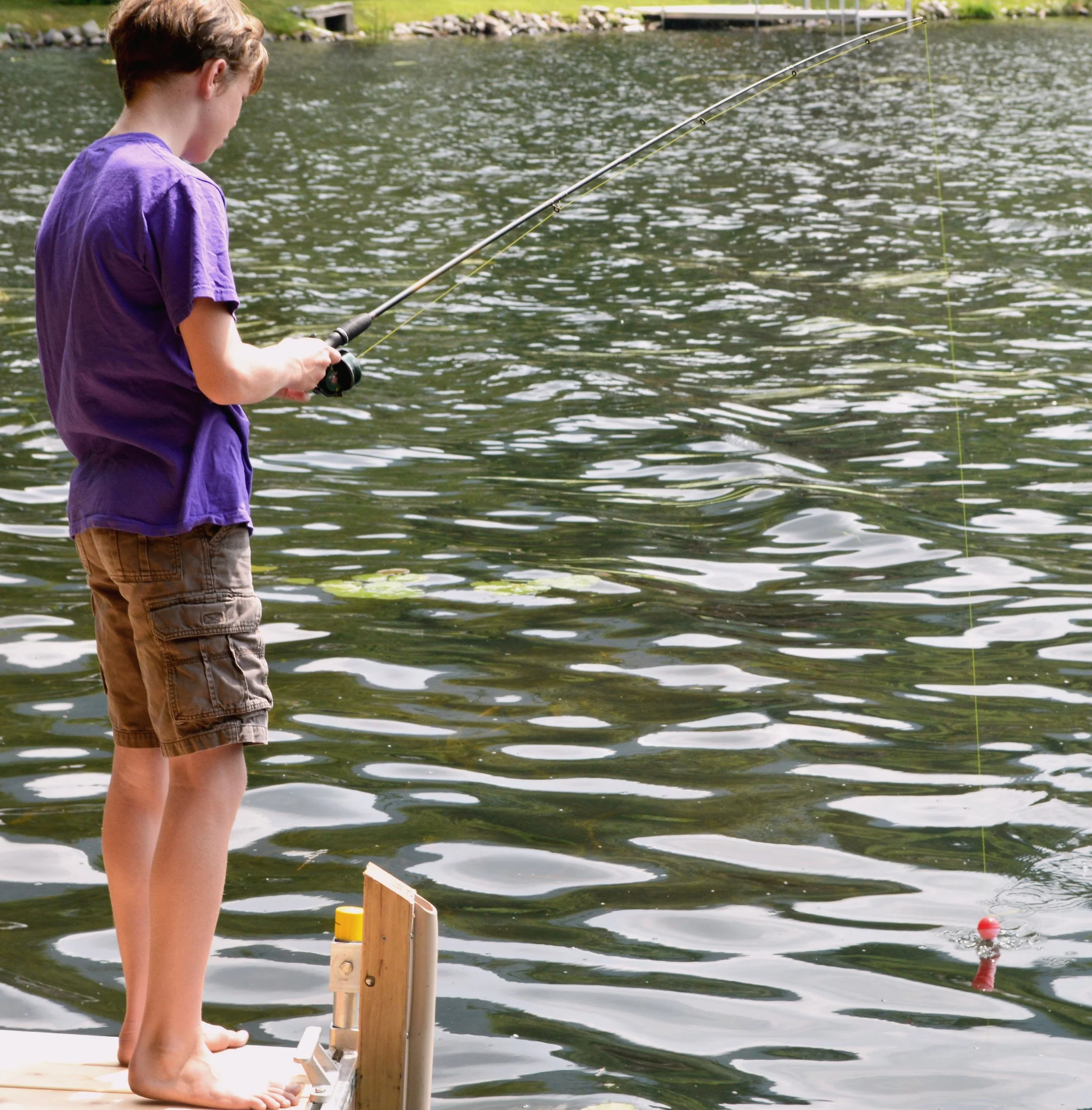
I have a theory I've shared with people over the years. I call it my fishing pole theory, and it's pretty simple. I think we should always have several fishing poles in the water.
By that, I mean we should be cultivating more than one possibility for our lives. We should have interests, relationships, ideas, ambitions, and opportunities that extend beyond whatever happens to be our primary focus. Not because we should expect everything to fall apart, but because we never know when we're going to encounter a door or a roadblock.
Sometimes a door opens that we weren't expecting. Sometimes the road we've been traveling suddenly ends. Either way, it helps enormously to have other possibilities already taking shape.
This isn't about having a backup plan for every conceivable disaster. That would be exhausting, and it would probably make us miserable. It's about remaining curious and engaged with life, even when things are going well. It's about recognizing that we are capable of wanting more than one thing, being good at more than one thing, and finding satisfaction in more than one place. And it's about being prepared to pivot when circumstances change.
One path can lead to many others.
Something else I've noticed over the years is that we tend to think about our lives far too narrowly. We imagine a particular destination and then become so invested in reaching it that we overlook everything else along the way. But paths lead to other paths. Those paths lead to still more paths, and some of them take us places we couldn't possibly have imagined when we started. A job that doesn't work out might introduce us to someone who changes the direction of our career. A relationship that ends might eventually make room for a different kind of connection. An interest we pursue casually might become something that gives our lives unexpected meaning.
Of course, not every disappointment turns into a wonderful opportunity. Sometimes something terrible happens, and it's simply terrible. We don't need to manufacture a silver lining or insist that everything happens for a reason. I have never found that helpful, especially when someone is grieving a loss that cannot be repaired. What we can recognize is that the future remains unfinished. The fact that one possibility has disappeared doesn't mean every possibility has disappeared with it.
Disappointment deserves its due.
I think we sometimes rush people through disappointment because we're uncomfortable with how painful it can be. We encourage them to look on the bright side, focus on what they still have, or start thinking about their next steps before they've had much opportunity to absorb what happened.
But disappointment is a legitimate emotional response to losing something we wanted, needed, or expected. Sometimes it's relatively minor. Other times it involves a profound loss of identity, security, or hope. Whatever it is, we need room to be angry, sad, discouraged, and even a little resentful when life treats us badly. Those feelings don't make us pessimistic or ungrateful. They make us human.
The important distinction is between allowing ourselves to experience disappointment and allowing disappointment to determine what happens next.
What disappointment cannot take away.
There are some things that remain available to us even when circumstances are very difficult. They aren't guarantees of happiness, and they certainly don't make suffering disappear. But they can help us decide who we want to be while we're finding our way through it.
Optimism is one of them. Not the kind that insists everything will work out beautifully, but the quieter conviction that something worthwhile may still be possible. Optimism doesn't require us to deny reality. It asks us not to assume we already know everything the future holds.
Grace is another. Grace toward ourselves when we've made mistakes, toward other people when they disappoint us, and toward the imperfect, complicated business of being alive. We can hold people accountable, including ourselves, without insisting that every failure defines a person forever.
We can also preserve our curiosity, our generosity, our sense of humor, and our willingness to connect with other people. We can remain decent when circumstances tempt us toward bitterness. We can choose not to let one painful experience become the measure by which we judge every experience that follows.
These are not things the world can reliably provide for us. They're qualities we cultivate, sometimes with considerable effort, and they become especially important when the things we thought we could depend on are no longer there.
Keep living while you figure it out (and you WILL figure it out).
When things don't work out as planned, I often encourage people not to make the disappointment the entire story of their lives. Give it the attention it deserves. Grieve what needs grieving. Be angry if you're angry. Take whatever time you need to understand what happened. But keep a few fishing poles in the water.
Stay interested in people. Learn something. Consider an opportunity you might previously have dismissed. Revisit an old ambition. Make room for the possibility that your life could take a direction you haven't considered yet. We don't get to control everything that happens to us, and sometimes we have remarkably little control. But we can continue to participate in our own lives, even when those lives look nothing like what we planned.
And sometimes, while we're standing there wondering what on earth we're going to do next, one of those fishing poles starts to move. Maybe that's what resilience really is: accepting that life won't always be fair, holding on to our optimism and grace when it isn't, and keeping enough fishing poles in the water to remind ourselves that there is almost always another path worth exploring.